Bay Area ‘Free America’ Walkouts Mark One Year Since Trump’s Second Inauguration, With Multiple Rallies
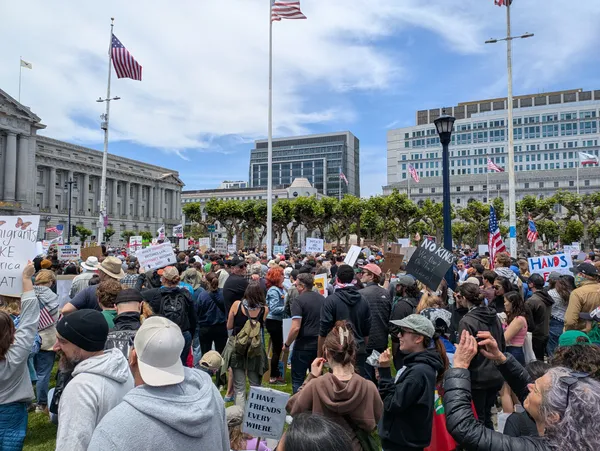
Coordinated Bay Area demonstrations aligned with a nationwide walkout timed for Jan. 20
Demonstrations under the “Free America Walkout” banner unfolded across the Bay Area on Tuesday, Jan. 20, 2026, marking one year since President Donald Trump’s second inauguration. Organizers promoted coordinated work, school and commerce walkouts as well as in-person rallies and marches, aligning local actions with a national day of protest.
The national mobilization called for participants to leave workplaces and classrooms and reduce consumer activity at a set time, framing the action as a collective refusal meant to pressure political leaders. Organizing materials circulated in advance encouraged participants to wear red, white and blue, and to engage in additional civic actions such as contacting elected officials.
San Francisco, Oakland and San Jose events drew participants to prominent civic spaces
In San Francisco, a permitted gathering was scheduled at Civic Center Plaza in the late afternoon, timed after the national walkout hour. Local organizing partners listed for the San Francisco event included a coalition of community and political groups. A separate publicly listed meet-up planned a gathering near Market Street with a walk to the Civic Center area.
In Oakland, multiple events were listed throughout the day, including neighborhood walkouts and a late-afternoon march route near Lake Merritt. Organizers also promoted youth- and family-oriented participation, emphasizing coordinated group activity and student speakers at a park gathering.
In San Jose, organizers listed a multi-hour action at City Hall beginning in the afternoon, positioning it as a South Bay hub for the day’s walkout activity.
Immigration enforcement and civil-rights concerns featured prominently in organizing materials
Across national and local event descriptions, immigration enforcement—particularly actions by U.S. Immigration and Customs Enforcement—appeared as a central focus, alongside broader concerns about civil liberties and democratic governance. Organizing language also referenced fears about expanded surveillance and threats to transgender rights.
In the days leading up to the walkout, national coverage tied the protests to intensifying anger over a fatal shooting earlier in January involving an ICE agent in Minneapolis, which helped galvanize anti-ICE demonstrations in several cities.
What the movement is asking for
- Work, school and consumer walkouts intended to demonstrate economic and civic pressure
- Opposition to expanded immigration enforcement operations
- Protection of civil liberties, including LGBTQ and transgender rights
- Policy demands circulated nationally, including healthcare-related proposals
Organizers described the walkout as a coordinated withdrawal from “normal routines” intended to elevate political stakes and build sustained participation.
As of Tuesday evening, publicly available event postings did not provide a single verified count of participants across Bay Area locations. Organizers signaled plans for follow-up coordination, including a strategy call later this week, as the movement framed Jan. 20 as a starting point for additional actions in the months ahead.