Bay Area Iranian Americans weigh hopes and fears as Iran’s leadership shifts after deadly strikes
A divided reaction in San Francisco as Iran enters an uncertain transition
Iranian Americans in San Francisco and the wider Bay Area are expressing sharply different expectations about whether Iran’s unfolding political transition could reduce regional threats and make the world safer, following a rapid escalation that included U.S.-Israeli strikes and the reported death of Iran’s Supreme Leader Ayatollah Ali Khamenei.
Across the region, public demonstrations have reflected both celebration and condemnation, underscoring how closely local communities are following events that could reshape Iran’s internal power structure, its security posture, and its relationship with the United States and Israel.
Two competing views: security gains versus instability risks
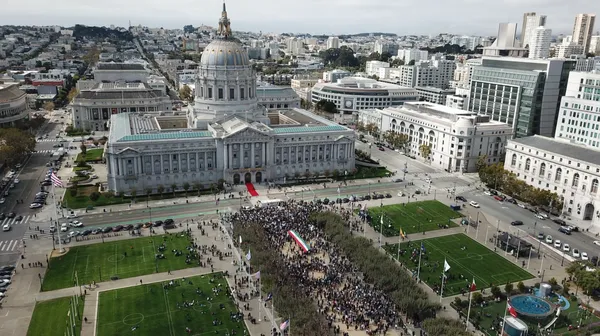
Among those who welcomed the leadership rupture, some framed it as a potential turning point after decades of repression and confrontation. In San Francisco, a rally drawing roughly a few hundred participants included pre-revolutionary Iranian flags and U.S. flags, alongside calls for a new political order in Iran. Supporters described the moment as an opening for a different future, while also signaling concern for relatives and contacts still inside Iran.
At the same time, anti-war demonstrators gathered in downtown San Francisco to oppose the strikes and warn that an externally driven escalation could widen conflict rather than contain it. Protesters marched near the Nancy Pelosi Federal Building and along Market Street, carrying signs and chanting against further military action.
- Supporters of the strikes argue that dismantling Iran’s existing leadership could reduce state-backed violence and curb threats tied to regional militias and missile capabilities.
- Opponents argue that the immediate aftermath of regime disruption can produce a security vacuum, retaliation, and broader instability—especially if civilian harm and regional spillover continue.
Information gaps deepen anxiety for families with ties to Iran
For Bay Area residents with family in Iran, uncertainty has been amplified by disruptions in communications reported during periods of unrest, when nationwide restrictions have made it harder to confirm safety, locate relatives, or verify conditions in specific cities. Community members have described the emotional strain of following fast-moving developments without reliable, direct contact.
In interviews at recent Bay Area demonstrations, participants repeatedly returned to two immediate priorities: the safety of relatives in Iran and clarity on who will control security forces and state institutions next.
What happens next: legitimacy, security forces, and international pressure
Key questions now center on whether any transitional authority in Iran can establish legitimacy, how the country’s security apparatus will respond, and whether external military pressure continues. In the Bay Area, debate has also emerged over what role—if any—exiled political figures, diaspora groups, and foreign governments should play in shaping Iran’s future.
For many Iranian Americans in San Francisco, the stakes are both personal and geopolitical: an outcome that reduces violence and lowers the risk of regional war would reverberate far beyond Iran, while a chaotic transition could intensify displacement, retaliation, and long-term insecurity.

San Francisco apartment rent growth accelerates again as limited supply and tech demand tighten market conditions

Fog, Festivities, and First Thursdays: Your San Francisco Morning Briefing