California Democrats Gather in San Francisco to Test 2026 Strategy as Trump Politics Reshape Governor’s Race
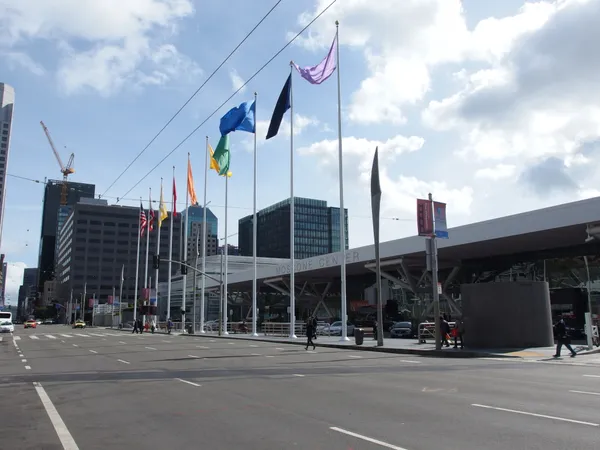
Delegates, candidates and campaign groups converge at Moscone Center for an early test of party unity
California Democrats are using a major San Francisco gathering to sharpen their election strategy for 2026, as the state’s open primary system and a crowded gubernatorial field raise the stakes for early organization. The three-day California Democratic Party state convention is scheduled for February 20–22, 2026, at the Moscone Center, bringing together delegates, activists, campaign operatives and allied organizations at one of the party’s largest in-state meetings of the cycle.
The convention combines formal party business with campaign training and networking events designed to build volunteer capacity ahead of the June 2026 primary and November 2026 general election. Training programs advertised around the convention include voter registration strategy sessions, digital and volunteer recruitment workshops, deep canvassing instruction, and voter protection panels. Those sessions are aimed at strengthening field operations in a year when turnout and organizational discipline could determine which candidates advance.
Top-two primary rules intensify anxiety about vote-splitting
California’s top-two system sends the two highest vote-getters—regardless of party—to the general election. With multiple prominent Democrats competing, party leaders and candidates face renewed concern that a fragmented vote could allow two Republicans to advance.
Recent polling has underscored that risk. In a mid-February Emerson College survey of likely voters, Republican Steve Hilton led the field, while Democratic Rep. Eric Swalwell and Republican Sheriff Chad Bianco were tied behind him. Several other Democrats trailed in the same poll, alongside a large share of undecided voters—an indicator that persuasion and turnout operations remain fluid months before ballots are cast.
San Francisco as a strategic stage for statewide messaging
San Francisco’s prominence in Democratic politics—and its role as a donor, volunteer, and media hub—makes it a natural venue for candidates seeking credibility and organization. For lesser-known contenders, the convention offers a concentrated opportunity to meet delegates, court endorsers, recruit volunteers and signal campaign viability. For better-known candidates, it is an early stress test: speeches, caucus meetings and side events can reveal whether Democratic voters are consolidating or continuing to splinter across ideological and regional lines.
- Candidate outreach: building relationships with activists who can mobilize in their counties.
- Operational focus: training aimed at registration, canvassing, digital outreach and election protection.
- Endorsement dynamics: signals about which campaigns are gaining organizational traction.
Trump-era politics and federal-state tensions remain a backdrop
While California remains heavily Democratic, the national political climate continues to shape intraparty strategy and voter motivation. In the Bay Area, recent months have included large-scale demonstrations and renewed debate over how Democratic-led cities respond to federal enforcement actions. Those developments have reinforced the party’s emphasis on organizing, coalition-building and turnout—especially among communities most sensitive to shifts in federal policy.
The convention’s central question is practical: whether Democratic candidates and operatives can translate energy into a unified coalition before the primary locks in the general-election matchup.
With months remaining before the primary, the San Francisco convention functions less as a finale than as a proving ground—where campaigns measure strength, test messages, and try to prevent the state’s election rules from producing an outcome Democrats fear most.