Connie Chan’s congressional run highlights Chinese American representation as Pelosi retirement reshapes San Francisco politics
A newly open House seat, a crowded field, and a familiar San Francisco question: who represents whom
San Francisco’s race for California’s 11th Congressional District has accelerated after Rep. Nancy Pelosi announced on November 6, 2025, that she will not seek reelection in 2026, ending a career that began in Congress in 1987. The contest is unfolding under California’s “top-two” primary system, with candidates seeking to finish first or second in the June 2026 primary to advance to the general election.
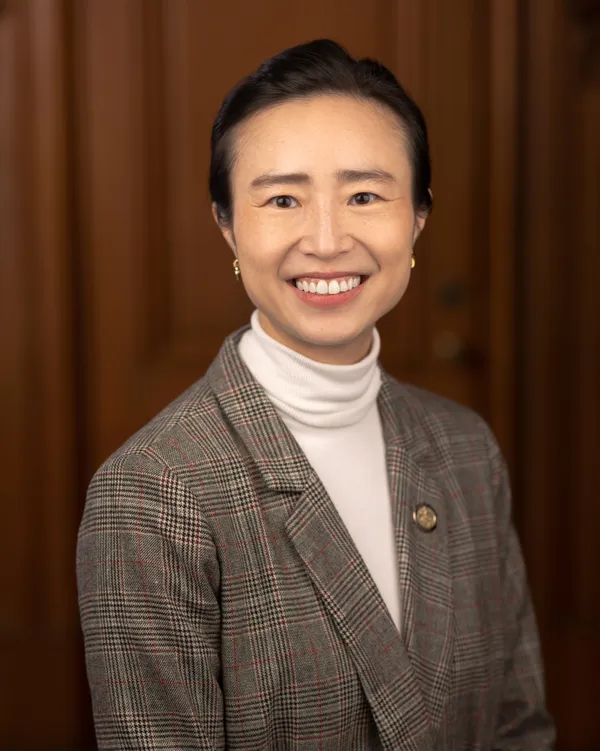
Among the Democrats vying for the seat is San Francisco Supervisor Connie Chan, who has emphasized her biography and community ties as a Chinese immigrant who moved to San Francisco as a teenager. Her campaign activity has included Chinatown-centered events and Chinese-language outreach, reflecting a strategy aimed at consolidating support among Chinese American voters while also building a broader citywide coalition.
Demographics are central — but not determinative
San Francisco’s electorate includes a large Asian American population, and the city’s Chinese community has long been politically influential in municipal contests. In the 11th District, the share of Asian residents is lower than citywide because the district excludes parts of San Francisco’s south side. Voter registration data does not include race or ethnicity, making it difficult to translate population figures into precise electoral expectations.
Chan’s candidacy has fueled discussion about representation: San Francisco has elected Chinese American leaders to city and state positions, but has not sent a Chinese representative to Congress. In Chinatown and other neighborhoods with substantial Chinese-speaking populations, Chan’s supporters have framed her run in historic terms, while acknowledging that Chinese American voters do not vote as a bloc.
Rivals are contesting the same terrain
Chan’s leading opponents include state Sen. Scott Wiener, a well-known figure in San Francisco and Sacramento politics, and Saikat Chakrabarti, a tech founder and former congressional staffer. Each is pursuing outreach to Chinese-speaking voters, including through culturally specific campaigning and multilingual organizing, underscoring that identity and language access are seen as meaningful assets in a citywide race.
Some Democratic officials and consultants argue that congressional effectiveness and seniority-building matter more than descriptive representation, especially in a federal environment where committee influence and coalition management shape outcomes. Others counter that representation can affect priorities, accessibility, and trust in government — particularly for immigrant communities.
Local issues are bleeding into a federal contest
Chan’s positioning has also intersected with recent local political battles, including the 2024 Proposition K vote that closed the Great Highway to cars — a measure opposed by many west-side residents and supported by Wiener. The dispute has been credited by some voters with reshaping perceptions and alliances, even as critics question whether such local transportation fights will be decisive in Washington-focused campaigning.
- The seat became open after Pelosi’s November 2025 retirement announcement.
- The June 2026 primary is expected to be the key bottleneck under the top-two system.
- Chinese-language outreach and identity-based messaging are active factors, but not universal persuaders.
With multiple candidates targeting the same constituencies, the contest is testing whether representation, governing experience, and local issue alignment can be combined into a citywide majority — or only a winning plurality.
The emerging shape of the race suggests a two-track campaign: candidates are competing for values-driven progressive voters while also fighting for neighborhood-based support, especially among Chinese American communities that have become a decisive force in close San Francisco elections.