Dead gray whale near Golden Gate Bridge becomes Bay Area’s first documented 2026 carcass
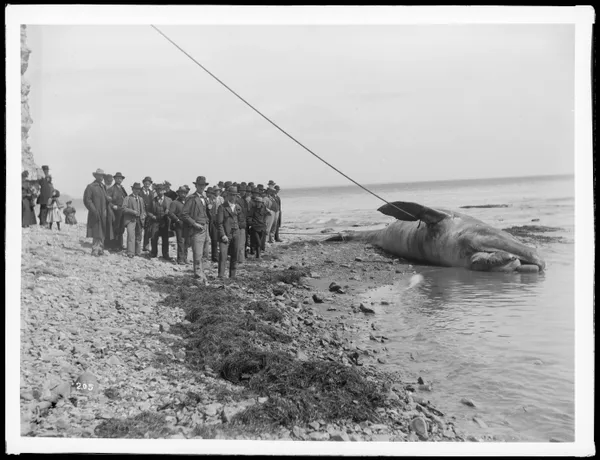
Carcass drifted beneath the bridge before landing on a Marin Headlands beach
A dead gray whale discovered near the Golden Gate Bridge has been confirmed as the first documented whale carcass in the greater San Francisco Bay Area in 2026, marking an early-season reminder of the risks whales face as they move along—and sometimes into—one of the nation’s busiest urban waterways.
The whale was first observed floating in Bay waters and later drifted beneath the Golden Gate Bridge before washing ashore at Black Sands Beach in the Marin Headlands, within the Golden Gate National Recreation Area. The animal was described as a female gray whale.
Necropsy conducted; cause not immediately determined
Marine wildlife specialists conducted a necropsy after the whale came ashore. Initial field findings did not provide a definitive cause of death, a common challenge when carcasses are decomposed or when external evidence is limited. Investigators typically document body condition and look for signs consistent with trauma, entanglement, disease, or other stressors, while also collecting samples that may support later laboratory analysis.
Why gray whales show up in the Bay—and why it can be hazardous
Gray whales migrate along the West Coast between breeding lagoons in Mexico and feeding grounds in Arctic and sub-Arctic regions. While they most commonly travel along the outer coastline, gray whales have also been recorded entering San Francisco Bay, sometimes lingering and foraging. Researchers have documented gray whales passing under the Golden Gate Bridge for decades, with some seasons seeing multiple animals.
Once inside the Bay, whales can face elevated exposure to vessel traffic. Large whales are vulnerable to collisions, and the region’s mix of ferries, cargo ships, recreational boating, and other traffic increases the likelihood of close encounters. Entanglement in fishing gear and other marine debris is also a persistent risk for whales along the California coast.
Context: recent years have brought unusually high whale mortality locally
The 2026 case follows heightened regional attention to whale deaths and strandings in recent years. In 2025, scientific tracking in the Bay Area recorded an unusually high number of dead whales, including a large share of gray whales, and multiple cases were assessed as suspected or probable vessel strikes. Those patterns have intensified scrutiny of how changing ocean conditions may affect whale behavior and body condition, and how that interacts with nearshore hazards.
What the public should do when encountering whales or carcasses
- Keep distance from live whales and avoid attempting to approach, touch, or herd an animal.
- Report sightings of whales in active waterways to support navigation safety and monitoring.
- Report dead or distressed marine mammals promptly so trained responders can evaluate the situation and, when feasible, collect scientific information.
Gray whale strandings are investigated when possible, but a definitive cause of death is not always immediately apparent.
For now, the Marin Headlands whale stands as the Bay Area’s first documented whale death of 2026, arriving as gray whale movements near San Francisco increase during the seasonal northbound migration.