Golden Gate Bridge suicide prevention net cut deaths sharply after full installation finished in early 2024
A long-running public safety project reaches a measurable turning point
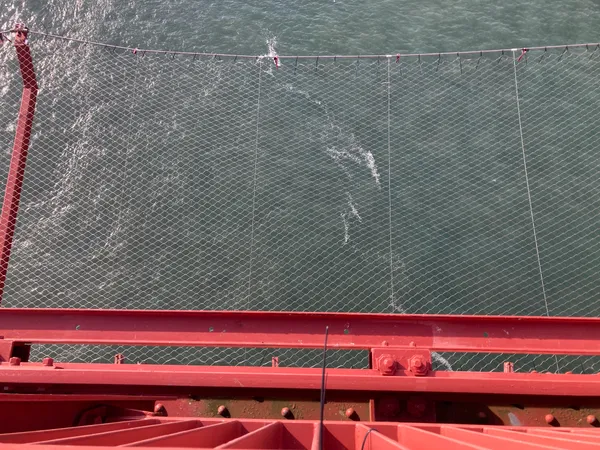
The Golden Gate Bridge, long recognized as one of the world’s most lethal suicide locations, has seen a steep decline in deaths since a continuous physical barrier system was completed along the span in early 2024. The stainless-steel suicide deterrent net, installed beneath both sides of the pedestrian walkways, was declared continuous across the bridge as of January 1, 2024, with limited segments using vertical fencing because of engineering and construction constraints.
In the 12 months following that completion milestone, confirmed suicides at the bridge fell to eight in 2024. District figures describe this as a 73% reduction from the site’s long-term average of about 30 confirmed suicides per year over the prior two decades.
How the system is designed to work
The deterrent consists of marine-grade stainless-steel netting positioned roughly 20 feet below the sidewalks and extending outward about 20 feet over the water. The configuration is intended to deter jumping by changing access and adding a painful, injurious intermediate outcome rather than an unobstructed fall.
Officials have emphasized that the net is primarily a deterrent, but also functions as a rescue platform when people land in it. Bridge staff coordinate with local fire and law enforcement agencies for rescues, and several net rescues have been completed using existing personnel and equipment.
What the data shows: fewer deaths, shifting patterns of intervention
Peer-reviewed research analyzing January 2000 through December 2024 found a substantial reduction in suicides at the bridge after installation was completed. Using statistical modeling, the study identified three periods—before installation, during installation, and after installation—showing a decline from 2.48 suicides per month before the net to 0.67 per month after completion, consistent with the 73% reduction cited in district reporting for 2024.
The same research also examined third-party interventions with people appearing at imminent risk on the bridge. It found interventions increased during installation, and remained elevated after completion compared with the pre-installation period—an indicator that staff and bystanders continued to encounter and respond to crisis situations even as fatalities declined.
Cost, timeline, and remaining work
Construction began in 2018, following years of planning and public process. The district places the total cost at about $224 million, funded through a combination of federal and state grants, bridge toll revenues, Proposition 63 mental health funds, and private donations.
While the barrier is described as continuous as of January 1, 2024, some sections have included vertical fencing in place of or in addition to netting due to design and maintenance-access requirements. Officials have said fencing is being replaced with netting in areas where contractor access needs have ended.
- Completion milestone: January 1, 2024
- Reported confirmed suicides in 2024: eight
- Project cost: approximately $224 million
If you or someone you know is in crisis, call or text 988 in the United States for the Suicide & Crisis Lifeline.