Gray whales are appearing earlier in San Francisco Bay, prompting new questions about migration and feeding patterns
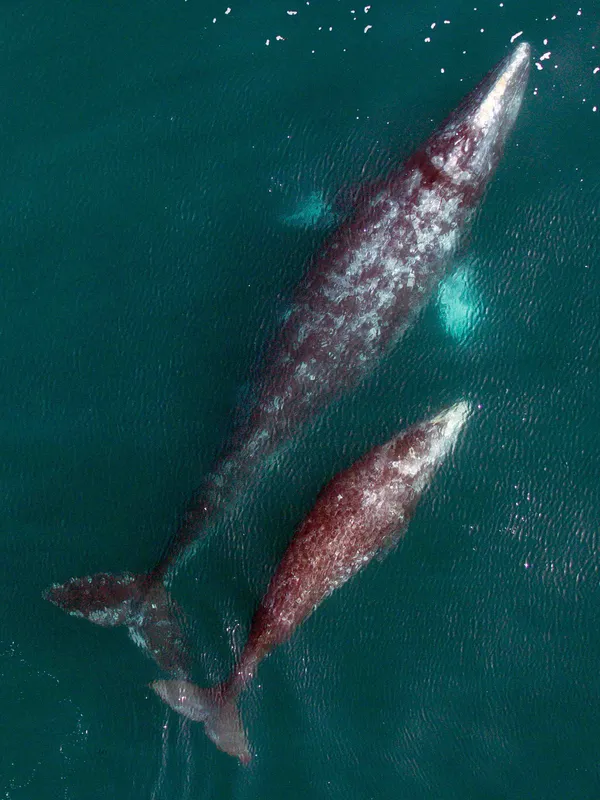
Unusually early sightings add to a broader shift in Bay whale activity
Gray whales are being documented in San Francisco Bay earlier than is typical for the annual northbound migration, a development that researchers say remains unexplained and is now a focus of intensified monitoring. Recent observations include multiple individual gray whales seen in the bay weeks ahead of the mid-February timing that field teams commonly associate with brief stopovers during migration.
The early appearances come after several years of heightened concern for the eastern North Pacific gray whale population. A prolonged period of elevated strandings and poor body condition along the West Coast—formally recognized as an unusual mortality event spanning 2019 through 2023—coincided with a sharp population decline and raised questions about food availability and broader ocean conditions. Scientists have emphasized that the longer-term outlook and the drivers of changing behavior are still uncertain.
Why the Bay, and why now, are still open scientific questions
Researchers tracking gray whales in and around the Golden Gate have documented a marked increase in the number of individuals entering the bay in recent years, with some whales lingering for days to weeks rather than passing through. The prevailing working hypotheses focus on changes in foraging conditions and energetic stress: gray whales undertake long migrations between winter breeding areas off Mexico and feeding grounds farther north, and individuals in poorer condition may be more likely to seek feeding or resting opportunities in atypical locations.
Gray whales are known to feed opportunistically on small invertebrates, and the bay’s shallow, turbid habitats can support prey that may be accessible to whales willing to forage in areas shared with heavy vessel traffic. At the same time, researchers caution that early arrival does not, by itself, establish a single cause; determining whether the shift reflects short-term variability or an emerging pattern requires repeated documentation across seasons and years.
More whales in busy waters increases risks for both animals and mariners
The growing overlap between whales and commercial shipping lanes, ferries, and recreational boating has renewed attention to collision risk. Vessel strikes have been identified as a recurring cause of serious injury and death for large whales in the region, and local marine wildlife responders have expanded outreach and training aimed at preventing collisions during peak movement periods.
- Field teams are using photo-identification and targeted observations to track individual whales’ movements and residence time in the bay.
- Boating-safety efforts emphasize situational awareness and route adjustments when whales are reported in active channels.
- Necropsies and diagnostic testing continue to be used to assess causes of death when carcasses are accessible and in suitable condition for examination.
Scientists say the early sightings underscore how much remains unknown about how gray whales are responding to changing environmental conditions—and how quickly human activity can become a key factor when whales move into urban waterways.
For now, the early arrivals are being treated as a significant data point rather than a definitive trend. Researchers are continuing to document timing, behavior, and body condition, while coordinating with maritime operators to reduce risks as whales move through one of the West Coast’s busiest ports.