Magnitude 3.4 earthquake near San Ramon rattles East Bay, extending months-long Tri-Valley swarm
What happened
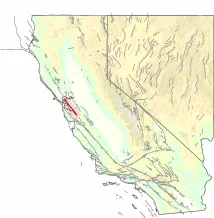
A magnitude 3.4 earthquake struck the East Bay late Friday morning, centered southeast of San Ramon in Contra Costa County. The quake occurred at 10:33 a.m. Pacific time on January 30, 2026, at a depth of about 9 kilometers (roughly 6 miles), placing it in the shallow-to-mid crust where shaking is more likely to be felt locally.
Within the first minute after the mainshock, a second earthquake measuring magnitude 2.9 was recorded in the same area. Early reports indicated the shaking was felt most strongly in the East Bay, with additional felt reports extending across parts of the Peninsula and San Francisco.
As of Friday evening, there were no confirmed reports of injuries or significant damage tied to the events.
Where it fits in the region’s recent seismic pattern
The January 30 quake occurred in the same Tri-Valley vicinity that has experienced recurring clusters of small earthquakes since at least November 2025. This pattern is commonly described as an earthquake swarm: a series of earthquakes in a limited area that does not follow the classic “mainshock-aftershock” sequence dominated by a single, clearly larger event.
During November and December 2025, the San Ramon area recorded a notably active period of swarm activity, with dozens of earthquakes reaching or exceeding magnitude 2. The sequence has included occasional larger events felt widely across the Bay Area, including a magnitude 4.0 on December 19, 2025.
Fault context and what scientists can—and cannot—conclude
San Ramon sits near the Calaveras Fault zone and a network of smaller fault structures. In swarm sequences, earthquakes can cluster tightly in space and time, and seismologists have noted that the precise drivers of swarms can be difficult to pinpoint in real time. Proposed mechanisms in similar sequences include small-scale fault slip and the movement of fluids at depth that can influence stress on nearby fractures.
Crucially, a swarm does not provide a deterministic signal that a larger earthquake will or will not follow. While the Bay Area’s broader earthquake risk remains substantial over the long term due to its major fault systems, a single swarm typically does not, by itself, allow a clear short-term forecast.
What residents can do after a felt quake
- Check for hazards at home: gas smells, small leaks under sinks, and shifted items on shelves.
- Review securement of heavy furniture and water heaters, which commonly cause injuries during stronger shaking.
- Refresh basic planning: meeting points, out-of-area contacts, and supplies for at least several days.
Earthquakes of this size are often a reminder to focus on readiness rather than prediction: knowing what to do during shaking and reducing household hazards can meaningfully lower risk.