Northern Lights Possible Over San Francisco Bay Area Monday Night as Severe Geomagnetic Storm Arrives
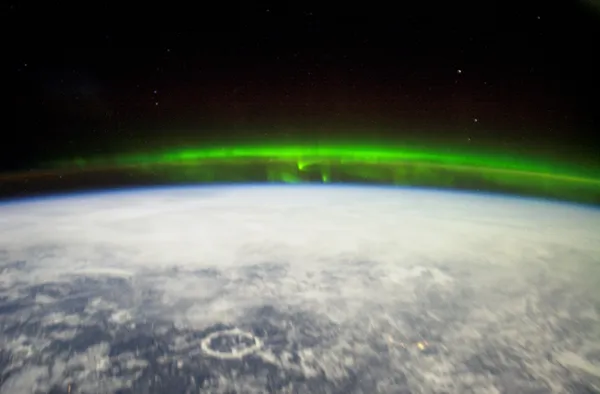
A rare Bay Area viewing chance tied to an intense solar eruption
Residents across the San Francisco Bay Area may have a chance to spot aurora borealis on Monday night, January 19, 2026, as a powerful space-weather event pushes the aurora’s visibility farther south than usual. A severe geomagnetic storm watch was issued for the January 20 UTC day, with storm conditions expected to begin as early as late Monday in U.S. time zones and potentially continue into Tuesday.
The trigger is a coronal mass ejection (CME) launched from the Sun on Sunday, January 18, in association with an X1.9-class solar flare from sunspot Region 4341. The CME’s arrival at Earth can disturb the planet’s magnetosphere, energizing particles that then interact with atmospheric gases and generate auroral light.
What the storm ratings mean for Northern California
Geomagnetic storms are categorized on a G-scale from G1 (minor) to G5 (extreme). The current watch calls for G4 (severe) conditions on January 20 UTC, with the possibility of lower levels (G1 to G3) around the time of initial arrival late Monday. Severe storms increase the likelihood that the aurora oval expands toward lower latitudes, a prerequisite for any potential visibility in California.
Timing: arrival was forecast from late January 19 (Eastern) into early January 20, with storming expected to weaken later on January 20 and residual effects possible on January 21.
Geographic reach: if conditions intensify as forecast, auroral visibility can extend well beyond typical high-latitude regions; Northern California sits near the southern edge of what becomes possible during the strongest episodes.
How to maximize chances of seeing aurora from the Bay Area
Visibility in the Bay Area is not guaranteed, even during strong storms. Auroras here are often faint and may appear as a low, diffuse glow toward the northern horizon. Clouds, marine haze, and light pollution can eliminate the view.
Look north from a dark location with an unobstructed horizon, away from city lights.
Plan for late evening into overnight, when skies are darkest and aurora activity can intensify.
Use a phone camera’s night mode or a longer exposure; faint aurora can register on sensors before it is obvious to the naked eye.
Even under severe storm levels, Bay Area aurora sightings typically depend on a narrow combination of peak geomagnetic intensity, clear skies, and reduced light pollution.
Infrastructure impacts possible during stronger storm periods
Severe geomagnetic storms can affect satellite operations and radio communications, and can introduce errors in navigation signals. Monitoring continues as the CME passes Earth and conditions evolve through Monday night into Tuesday.