Public transit routes from San Francisco to Levi’s Stadium in Santa Clara, with key transfers explained
Why the car-free trip matters for big events
Levi’s Stadium sits at 4900 Marie P. DeBartolo Way in Santa Clara, next to the Tasman corridor and the Great America transit hub. For many San Francisco residents, the most reliable car-free approach is to combine regional rail with local light rail, reducing exposure to event-day freeway congestion and limited parking availability near the venue.
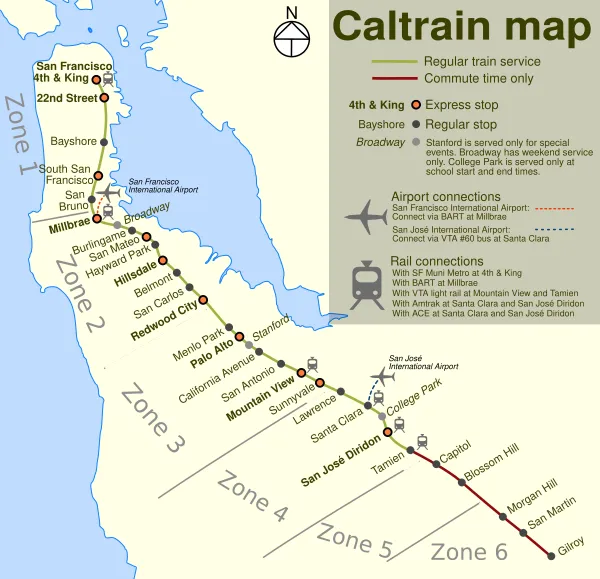
Primary option: Caltrain to Mountain View, then VTA light rail to Great America
The standard rail-and-light-rail chain begins on Caltrain, which runs between San Francisco and the South Bay. For stadium-bound riders, the key connection point is Mountain View Station, where passengers transfer to VTA light rail’s Orange Line. The Orange Line serves Great America Station on the north side of the stadium complex, placing riders within a short walk of the gates.
For payment, riders can use the Clipper system across participating services, but transfers require proper validation steps when switching operators. On select event days, joint day-pass products may be offered that bundle Caltrain and VTA travel for a single day; availability and rules can vary by event, and some passes have station-specific purchase restrictions.
Alternate path: BART to Milpitas, then VTA Orange Line to Great America
Another car-free route relies on BART to Milpitas Station, followed by a transfer to VTA light rail’s Orange Line for service to Great America Station. This option can be useful for travelers coming from parts of the East Bay or for riders who prefer BART’s network for the first leg of the trip. As with the Caltrain transfer, riders should plan for ticketing and validation requirements when moving between systems.
Regional rail that stops closest: Capitol Corridor and ACE
Amtrak’s Capitol Corridor and the ACE train both serve the Santa Clara–Great America station, commonly described as about a five-minute walk from the stadium. These services can be practical for riders originating outside the immediate Peninsula corridor, including parts of the East Bay and inland communities. For certain high-demand days, operators may impose special boarding requirements, such as reservations, even on routes that typically allow flexible access.
What to plan for on event days
Arrive early: post-event crowd dispersal can create bottlenecks at platforms and station entrances.
Know your stadium-side queue: VTA event guidance may separate lines by destination after games and concerts.
Accessibility: courtesy wheelchair or mobility assistance is available on specific links, including between VTA’s Great America Station and stadium gates, with operational details varying by event.
Bag and prohibited-item rules: Levi’s Stadium enforces a clear-bag policy and restricts items such as umbrellas and large backpacks; guests should verify current entry rules before leaving home.
For San Francisco riders, the most common no-car strategy is a rail trip south paired with VTA light rail to the Great America stop, then a short walk to the stadium.
For any trip, the final step is the same: build in extra time for transfers, fare validation, and post-event station crowds—especially for sellouts and special events.