San Francisco downtown safety ambassador patrols secured after $5 million funding package prevents planned shutdown
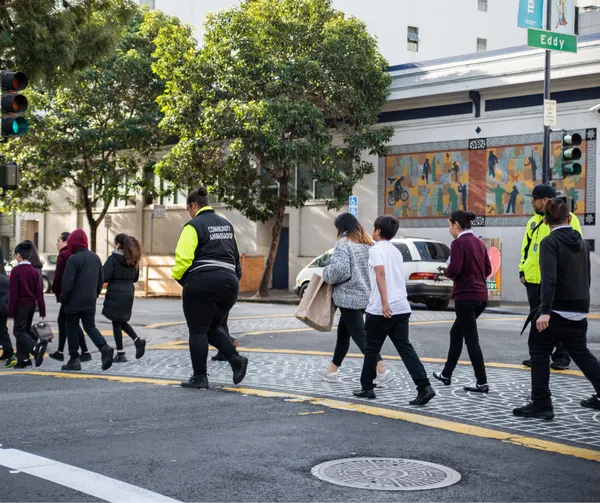
A last-minute funding infusion stabilizes a cornerstone of downtown’s “clean-and-safe” strategy
San Francisco’s network of downtown safety and hospitality ambassadors was facing an immediate risk of drawdowns as short-term funding neared expiration, putting a highly visible, non-police presence in the city’s core in jeopardy. A $5 million funding commitment has now provided a bridge intended to keep ambassador deployments operating while the city and its partners move toward longer-term contracting and coordination.
Downtown ambassador programs typically focus on public-facing roles that range from wayfinding and visitor assistance to de-escalation, observation, and reporting. While ambassadors are not sworn law enforcement, the programs are designed to increase “eyes on the street,” respond to quality-of-life issues, and connect people to services and outreach teams already operating in high-need corridors.
How downtown ambassador programs fit into San Francisco’s broader public-safety and recovery efforts
The ambassador model has expanded citywide during the post-pandemic period, with deployments supporting downtown recovery priorities that include transit access, tourism activity, and commercial corridor vitality. City policy documents and budget materials have framed ambassadors as one element within a broader set of street-response tools that also includes crisis and outreach teams, as well as police-focused operations in specific areas.
Across San Francisco, ambassador initiatives operate through multiple channels: city-administered programs, district-based services organized through local benefit districts, and nonprofit or private contractors selected through competitive procurement. Recent contracting decisions have emphasized standardized service expectations and coverage targets, with organizations tasked to document activity such as corridor coverage, cleanliness-related outputs, and incident responses.
What the $5 million changes—and what it does not
The $5 million lifeline is structured as a near-term stabilization measure rather than a wholesale redesign of downtown safety operations. It primarily addresses continuity: keeping trained staff on duty, preventing gaps in coverage, and avoiding a disruptive stop-start cycle that can undermine operational planning for downtown stakeholders.
At the same time, the funding does not resolve the central governance questions that have followed the growth of ambassador programs: how performance is measured across providers, how responsibilities are divided between ambassadors and city agencies, and how contracts are monitored to avoid duplication or unclear lines of authority.
Oversight and accountability remain central issues as contracts scale up
San Francisco’s increasing reliance on contracted ambassador services has heightened scrutiny of spending controls and performance metrics, particularly during periods of fiscal constraint. Past budget debates have included calls for clearer reporting on staffing levels, service hours, and outcomes—alongside demands for consistent oversight when programs expand coverage or extend operating hours.
- Ambassadors are typically unarmed and positioned as a non-police alternative for certain street-level interactions.
- Programs vary in scope, from hospitality and wayfinding to de-escalation and cleanliness-focused stewardship.
- Recent contracting cycles have expanded the number of service providers and geographies covered.
The latest funding move is designed to preserve day-to-day downtown coverage while the city continues consolidating and standardizing ambassador operations across multiple districts and agencies.
The immediate effect of the $5 million is operational continuity downtown. The longer-term impact will depend on whether upcoming budget cycles and contract structures deliver stable funding, clearer performance benchmarks, and coordinated deployment that aligns ambassador roles with enforcement, outreach, and public-works functions already active in the city’s core.