San Francisco grapples with U.S.-Iran escalation as Anthropic is barred and OpenAI reaches Pentagon agreement
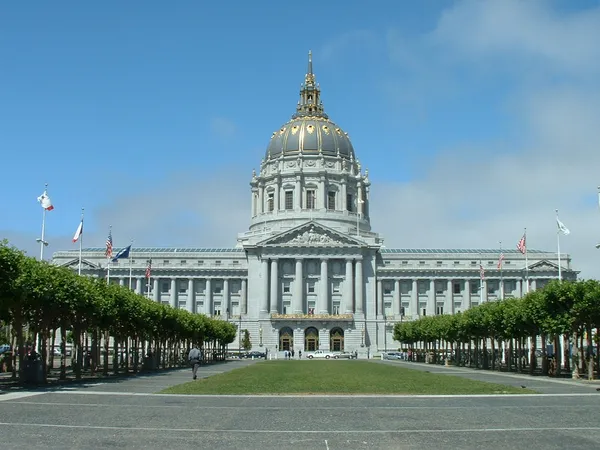
A widening foreign-policy crisis collides with an AI governance rupture in San Francisco
San Francisco, home to two of the most closely watched U.S. artificial intelligence companies, became a focal point this weekend as a sharp escalation involving Iran overlapped with an extraordinary federal dispute over how advanced AI systems may be used in national security settings.
In Washington, the Trump administration’s actions against Iran and the administration’s approach to military AI accelerated on parallel tracks, pulling local companies—and local elected officials—into a high-stakes debate about oversight, safeguards and the boundaries of government authority.
Federal order targets Anthropic; Pentagon shifts to OpenAI
On Friday, Feb. 27, 2026, President Donald Trump ordered federal agencies to stop using technology from San Francisco-based Anthropic, setting a six-month phaseout period for agencies that rely on its products. The order came as the Pentagon pressed Anthropic to accept terms allowing its AI model to be used for “all lawful purposes.”
Later that day, Defense Secretary Pete Hegseth designated Anthropic a “supply chain risk to national security,” a move that barred defense contractors, suppliers and partners working with the U.S. military from conducting commercial activity with the company. Anthropic has said it intends to challenge the designation.
Within hours, OpenAI announced it had reached an agreement with the Pentagon to deploy its models on classified networks. OpenAI said its agreement included restrictions centered on prohibitions on domestic mass surveillance and on maintaining human responsibility for the use of force, including in autonomous weapon systems.
San Francisco officials move to publicly support ethical “red lines”
The federal actions triggered immediate reaction locally. San Francisco supervisors Stephen Sherrill and Bilal Mahmood said they planned to introduce a resolution at the Board of Supervisors meeting on Tuesday supporting the ability of AI companies to maintain stated values when facing federal pressure tied to defense contracting.
Public demonstrations were also organized in the city. A rally was held Friday evening in Golden Gate Park, and organizers promoted a larger gathering planned for Saturday afternoon at the Speaker Nancy Pelosi Federal Building in SoMa.
Iran escalation adds urgency to debate over military AI
The dispute over AI guardrails unfolded alongside a broader military escalation involving Iran. On Saturday, Feb. 28, 2026, Trump publicly claimed Iran’s Supreme Leader Ayatollah Ali Khamenei had been killed during U.S.-Israeli strikes. Iranian officials disputed the claim. The developing conflict has raised questions in San Francisco’s tech community about how quickly AI tools could be integrated into sensitive military operations amid fast-moving events.
What remains unresolved
- What specific contractual terms the Pentagon sought from Anthropic—and what differences, if any, exist between those terms and OpenAI’s agreement.
- How the “supply chain risk” designation will affect Anthropic’s commercial partnerships beyond direct federal work.
- Whether San Francisco’s pending resolution will influence policy outcomes, or primarily serve as a political signal from the city that hosts both companies.
The combined developments have positioned San Francisco at the intersection of wartime decision-making and the emerging rules governing AI deployment in national security.

San Francisco apartment rent growth accelerates again as limited supply and tech demand tighten market conditions

Fog, Festivities, and First Thursdays: Your San Francisco Morning Briefing