San Francisco Mayor Daniel Lurie expands private funding networks as City Hall confronts deficits and downtown recovery
Private capital becomes a visible lever in early Lurie agenda
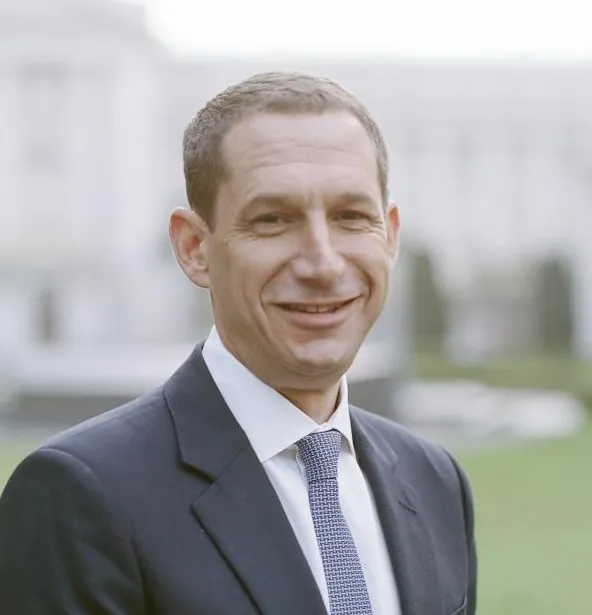
San Francisco Mayor Daniel Lurie has moved quickly to supplement public dollars with philanthropic and corporate money as his administration addresses two interconnected pressures: a large structural budget gap and an uneven recovery in the city’s core commercial districts. The approach leans on networks of wealthy donors and business leaders—some long embedded in the city’s civic institutions—who are now underwriting targeted initiatives tied to homelessness, public cleanliness and downtown revitalization.
Homelessness and behavioral health: a major private fundraising push
In May 2025, the mayor announced $37.5 million in early commitments for the Breaking the Cycle Fund, a public-private effort designed to expand interim shelter and treatment capacity and strengthen services linked to addiction and mental health. The fund is overseen by the San Francisco Foundation and is structured to report donations under state and local rules that apply to contributions connected to city officials and governmental decision-making. City legislation approved earlier in 2025 enabled the creation of the fund and aimed to reduce administrative friction for initiatives in these policy areas.
Early commitments disclosed at launch included $11 million from Tipping Point Community, $10 million from the Charles and Helen Schwab Foundation, $10 million from the Crankstart Foundation, $6 million from Keith and Priscilla Geeslin, and $500,000 from the Horace W. Goldsmith Foundation.
Downtown recovery: a new nonprofit and larger-scale pledges
Separately, civic and business leaders aligned with the mayor helped form the Downtown Development Corporation (DDC), a nonprofit public benefit corporation intended to raise private money for projects aimed at improving street conditions and supporting economic activity downtown. The DDC has been described as part of a broader strategy to accelerate improvements in the city center while public finances remain constrained.
The organization’s leadership and board draw from finance, tech, organized labor and philanthropy. Public reporting has identified board members including David Stiepleman of Sixth Street and Sam Cobbs of Tipping Point Community, alongside figures such as Chris Larsen and Meg Whitman, and representation from labor leadership. By late 2025, the DDC announced more than $60 million in early contributions and commitments from a mix of corporate, philanthropic and individual partners.
Fiscal backdrop: deficits, cuts, and competing priorities
Lurie’s fundraising push has unfolded alongside significant budget decisions at City Hall. In May 2025, the mayor presented a $15.9 billion proposed two-year budget for fiscal years 2025–2026 and 2026–2027, designed to close an approximately $800 million shortfall. The budget debate included proposed reductions in some city positions and nonprofit funding while prioritizing core services, including public safety. In July 2025, Lurie signed a $15.9 billion budget package.
Governance questions raised by public-private partnerships
The mayor’s reliance on private money for public-facing priorities has also prompted scrutiny from government-transparency and ethics advocates, who warn that large-dollar donors could gain outsized access and influence. Supporters counter that philanthropic funding can accelerate tangible improvements when public resources are limited. The administration’s key challenge is to demonstrate that fundraising, program selection and implementation remain transparent, legally compliant and insulated from preferential treatment.
- Breaking the Cycle Fund: targets shelter, treatment beds and supportive services tied to homelessness and behavioral health.
- Downtown Development Corporation: seeks private financing for street conditions and economic activity downtown.
- City budget actions: designed to close a historic deficit while protecting core services and reshaping spending practices.
San Francisco’s recovery efforts are now being pursued through a dual track: public budgeting and policy on one side, and increasingly formalized private fundraising on the other.