San Francisco ‘Party Line’ payphone links callers to Abilene, Texas, aiming for cross-partisan dialogue
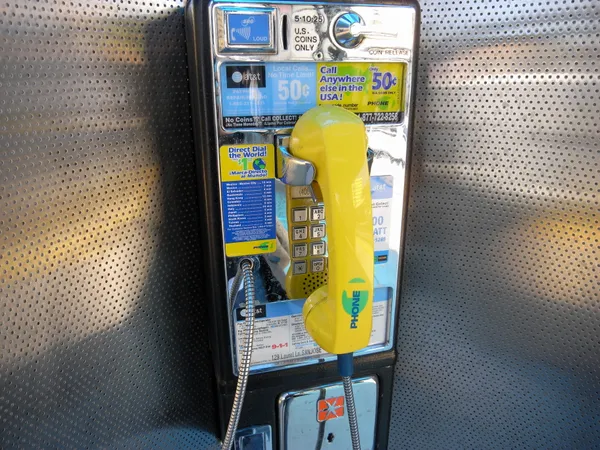
A public phone meant to connect strangers across political divides
A public payphone-style installation on Valencia Street in San Francisco is being presented as a “party line” intended to connect callers with a matching phone in Abilene, Texas. The setup is designed so that lifting the receiver places an automatic call to the other location, creating a direct, one-to-one channel for conversation between strangers in two cities often portrayed as politically distant.
Text displayed on the phone identifies the project as “The Party Line” and describes it as a social experiment meant to encourage “meaningful conversation” between people in places framed as ideologically different. The installation’s messaging references stress and mood-related brain chemistry, asserting that hostile political discourse can heighten stress while positive conversations can reduce it.
How the installation appears to work
Unlike traditional payphones that dial any number, the project is described as a fixed connection between two endpoints. In telephony, this kind of configuration is commonly implemented as a “ringdown” or auto-dial line, where taking a handset off-hook triggers a call to a pre-set destination rather than requiring a user to dial.
Projects that repurpose legacy phone hardware for public calling have existed for years, including efforts that convert old payphones into internet-based calling devices and place them in public settings for free use. These projects typically rely on Voice over IP systems rather than conventional payphone networks, and are often maintained by volunteers or small organizations.
What the project is—and is not
The installation is not affiliated with any official political party organization, and it is not a voter-contact tool such as campaign phone banking. Its stated function is interpersonal conversation rather than electoral mobilization.
That distinction matters in a city where political engagement is often organized through structured activities—endorsements, canvassing, and scripted calls—while this phone invites unscripted exchanges between people who do not know each other.
Opportunities and constraints for real-world impact
Any public, unsupervised conversation platform also comes with predictable limitations. The experience depends heavily on who picks up at both ends, when they pick up, and whether participants are willing to stay engaged. The format also provides no built-in moderation, which can affect how welcoming or safe the interaction feels for some users.
Still, the installation reflects a broader interest—visible in local civic and nonprofit programming—around facilitated dialogue across disagreement. In contrast to workshops and moderated discussions, the “party line” approach relies on spontaneity: a brief, anonymous call intended to lower the barrier to first contact.
- Location-based pairing: two fixed endpoints rather than open dialing.
- Conversation-first intent: no stated campaign, endorsement, or fundraising function.
- Minimal structure: no facilitator, prompts, or screening beyond participation by choice.
The phone’s on-device text frames the call as a social experiment designed to encourage a respectful exchange between strangers.
Whether the project produces sustained dialogue or mostly brief encounters, it places a tangible, analog object into a polarized media landscape—and asks what happens when people are connected by a shared line with nothing to do but talk.