San Francisco Supervisor Revives Proposal for $1.4 Billion Central Subway Extension to Fisherman’s Wharf
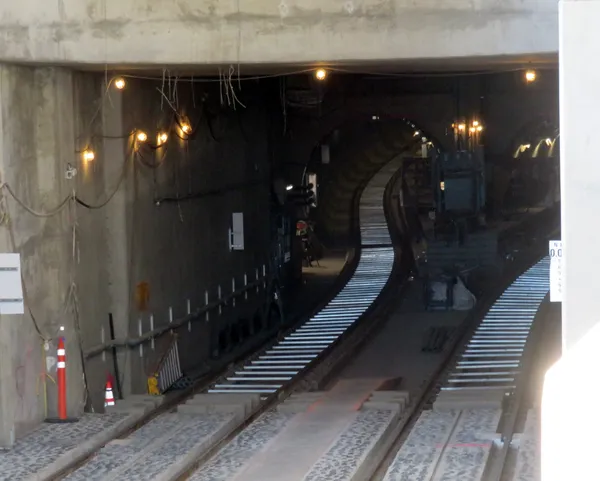
A long-discussed “Phase 3” concept returns to City Hall
San Francisco Supervisor Danny Sauter has renewed a proposal to extend the Central Subway north from Chinatown toward North Beach and Fisherman’s Wharf, reviving a debate that has surfaced repeatedly since planning work outlined potential routes in the mid-2010s. The latest push is centered on a City Hall hearing intended to revisit earlier engineering concepts and outline options for an extension whose cost has been cited as reaching about $1.4 billion for fully underground alternatives.
The Central Subway opened in 2022 as a 1.7-mile extension of Muni’s T Third line, running underground through SoMa to Chinatown with three new stations. Its delivery history has remained a central reference point in the current discussion: the project was completed years later than initially expected and at a final price well above early estimates.
What the extension would add, and where it could go
Earlier concept work examined a northward extension that could bring rail service closer to major destinations and dense residential areas in the northeast part of the city. Two frequently discussed alignments would generally continue the subway north via Powell Street to Beach Street, or follow a corridor closer to Columbus Avenue.
- Potential new stations have been discussed in the North Beach area, including near Washington Square.
- The extension goal is a one-seat ride between the waterfront and the existing T Line subway segment that connects to downtown and regional rail hubs.
- Proponents describe the project as a way to increase overall ridership on a line that currently terminates in Chinatown.
Financial constraints shape the near-term outlook
The renewed proposal arrives as the San Francisco Municipal Transportation Agency faces a major operating budget deficit. Agency budget documents describe an estimated shortfall of $307 million beginning in July 2026, projected to grow to about $434 million by July 2030 without new funding or major cost changes.
City and transportation officials have been weighing revenue measures and operational changes to stabilize service. In that context, the subway extension is being discussed largely as a longer-term capital initiative rather than a near-term construction start, with funding availability a defining uncertainty.
Community concerns focus on disruption and construction impacts
North Beach residents and business owners have repeatedly raised concerns about the disruption associated with major underground construction, including the need for staging areas, station excavation, and potential impacts to parks and commercial corridors. Some local businesses cite prior Central Subway construction as a cautionary example, pointing to noise, dust, access constraints, and long construction timelines.
Debate over the extension has tended to center on a tradeoff between long-term mobility gains and the near-term consequences of construction in dense, historic neighborhoods.
What happens next
The City Hall hearing is expected to focus on the status of prior studies, potential alignments, and how an extension could be sequenced alongside other transit priorities. Any move beyond preliminary discussion would require identification of funding sources, environmental review, and coordination among city, regional, state, and federal partners.