San Francisco’s Martin Luther King Jr. Memorial at Yerba Buena Gardens ranks among America’s largest tributes
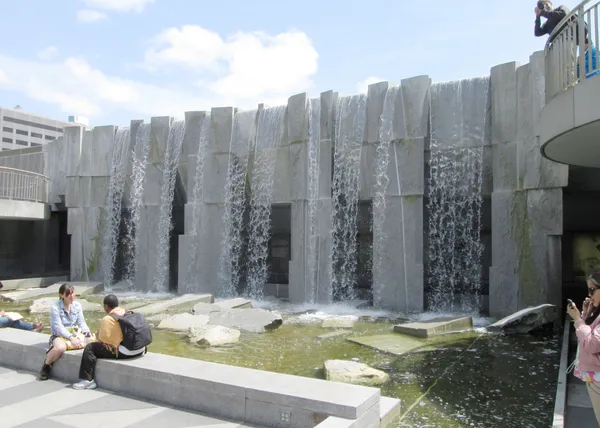
A downtown memorial built around water, words, and public space
In the heart of San Francisco’s Yerba Buena Gardens, a Dr. Martin Luther King Jr. memorial designed as a waterfall, reflecting pool, and inscription-lined passage has become one of the country’s largest public tributes to the civil rights leader. The site—commonly identified as “Revelation”—was completed in 1993 and occupies a prominent location along Howard Street in the city’s South of Market neighborhood.
The memorial is integrated into the broader Yerba Buena Gardens complex, a multi-block public open space bordered by major cultural and commercial destinations downtown. Unlike stand-alone statues, the design places visitors in a transitional corridor behind a sheet of cascading water, where movement, sound, and text define the experience.
Design team and core elements
The work was created by artist and sculptor Houston Conwill in collaboration with poet Estella Conwill Majoza and architect Joseph De Pace. It combines a large waterfall wall with a reflective pool and a series of etched images and inscribed passages drawn from King’s speeches and the broader civil rights era.
- Location: 750–751 Howard St., within Yerba Buena Gardens
- Primary features: waterfall backdrop, reflective pool, glass panels with images and text
- Concept: a space for reflection that uses water and language as central materials
The memorial’s inscriptions and imagery are positioned so visitors encounter King’s words in close proximity, with the waterfall providing a continuous acoustic backdrop.
Place in the city and role in civic life
Beyond its scale and design, the memorial has served as a recurring focal point for public gatherings tied to King’s legacy. Each year, Martin Luther King Jr. Day programming in San Francisco has included a march route that ends at Yerba Buena Gardens, linking the memorial to ongoing civic observances in the city’s downtown core.
The site’s setting—within an active public park surrounded by museums, performance venues, and high-foot-traffic corridors—has helped make the memorial accessible to residents and visitors. Its placement also reflects a broader trend in contemporary memorial architecture: integrating commemorative spaces into everyday urban life rather than isolating them from it.
Maintenance and continued visibility
Yerba Buena Gardens has periodically scheduled maintenance work affecting the fountain and surrounding elements, reflecting the operational needs of a large water feature in a heavily used public space. Park updates have also included improvements to nearby pathways and visitor access, underscoring that the memorial functions as both an artwork and an active piece of civic infrastructure.
More than three decades after its completion, the memorial remains a central landmark for reflection, public education, and annual commemorations—built to be encountered not only on symbolic dates, but as part of the city’s daily rhythm.