Santa Rosa’s former Grace Mansion site, once a hub for dignitaries, now houses Grocery Outlet
A landmark home that vanished from Fourth Street
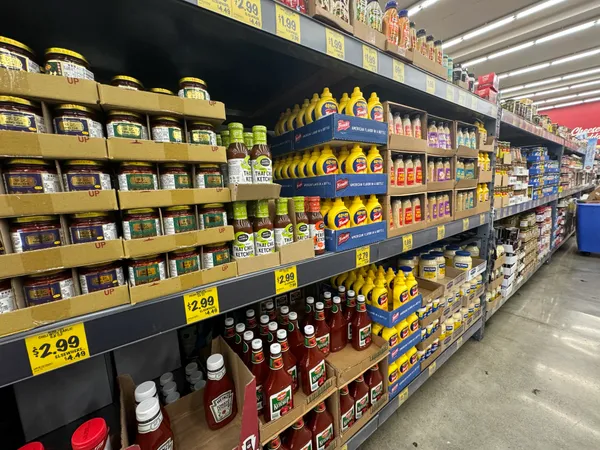
The Grocery Outlet at 1116 Fourth St. in Santa Rosa operates on a parcel that once held one of the city’s most prominent private residences: the Grace Mansion, a large early-20th-century home built for Joseph T. Grace, a leading North Bay brewer and civic figure. The mansion stood for decades as Fourth Street transitioned from an elite residential corridor into a commercial artery.
Joseph T. Grace and the rise of a regional brewing powerhouse
Joseph T. Grace was born in 1875 and arrived in Santa Rosa as a child. As a young entrepreneur, he and his brother Frank first built a local business selling potatoes and then opened a grocery store at Fourth and A streets. Their economic footprint expanded dramatically after they purchased the Metzger Brewery in 1897 and renamed it Grace Bros. Brewing Company.
Over the following decades, Grace Bros. grew beyond Santa Rosa, acquiring breweries in Los Angeles, Sacramento and Fresno and distributing beer across California. By the 1940s, the company ranked as the state’s fourth-largest brewery.
Construction after the 1906 earthquake reshaped the property
After the 1906 earthquake damaged an older brick residence on Grace’s Fourth Street property, the decision was made to replace it rather than restore it. Construction of the new mansion began in 1907 after demolition of the earlier structure. The project reused parts of the prior building, including the foundation and the original roof, and the family moved into the new home in December of that year.
A social center built for large-scale entertaining
The residence drew on Federalist design cues and featured a grand portico with Corinthian columns. Interior spaces were arranged to accommodate music and dining on a large scale, with rooms described in contemporaneous coverage as outfitted for entertaining, including chandeliers and dedicated gathering areas.
The mansion became a high-visibility venue in Santa Rosa’s social life. Large events drew hundreds of attendees, including a Red Cross garden benefit in 1940 that brought roughly 1,500 people to the property. Over time, the guest lists mixed regional political figures, dignitaries and local business and civic leaders.
- Built: 1907 (family moved in December 1907)
- Original owner: Joseph T. Grace
- Former function: private residence and major entertaining venue
- Current use of the site: Grocery Outlet retail store at 1116 Fourth St.
Demolition and commercial redevelopment
By the early 1950s, Fourth Street’s character had changed as commercial activity intensified. The Grace family sold the property to Safeway with terms that allowed them to demolish the mansion themselves and salvage building materials for renovations at their Alexander Valley home. The mansion was then torn down, marking the end of a highly visible landmark that had helped define a period of Santa Rosa’s civic and social history.
By the mid-20th century, the site’s transition from a private estate to retail development reflected broader changes along Fourth Street, where residential prestige steadily gave way to commercial use.
A legacy that remains, even as the building does not
While no physical trace of the mansion remains at the grocery store site, Grace’s name persists in Santa Rosa through local place names and civic references. Joseph T. Grace later spent his final year living at the St. Francis Hotel in San Francisco and died in October 1957 after suffering a stroke and a subsequent heart attack. Funeral services were held in San Francisco, followed by burial at Holy Cross Cemetery in Colma.
Today, the property’s history is largely invisible in its current retail form, though archival photographs and local records continue to document the mansion that once stood there.