Super Bowl LX spotlights San Francisco’s recovery push as tourism, security, and transit strain converge
A national broadcast week centered in San Francisco
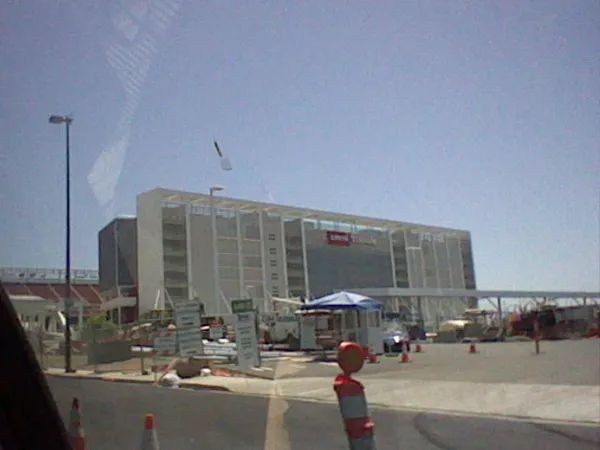
Super Bowl LX will be played on Sunday, Feb. 8, 2026, at Levi’s Stadium in Santa Clara, but a large share of the league’s public-facing programming has been staged in San Francisco during the days leading up to kickoff. The concentration of events has turned the city into a primary backdrop for the week’s television coverage and social media content, putting familiar landmarks and neighborhoods in front of a national and international audience.
Local tourism leaders have framed that exposure as a chance to reshape perceptions of the city after years of pandemic-era headlines about empty offices, diminished foot traffic, and visible street disorder. The theory is straightforward: high-frequency imagery of waterfront vistas, major attractions, and crowded public spaces can influence leisure travel planning long after the final whistle.
Visitor spending projections and who benefits
Economic modeling commissioned by the Bay Area Host Committee estimates total regional impact from Super Bowl LX ranging from $370 million to $630 million. The same report projects $250 million to $440 million of that activity could accrue in San Francisco County, compared with $100 million to $160 million in Santa Clara County, with smaller totals expected across other Bay Area counties.
Those figures are projections rather than audited results, and the benefits are expected to be uneven. Hotels typically see the most immediate revenue lift, followed by large event venues and major hospitality groups, while smaller bars, restaurants, and service businesses compete for a finite pool of high-spending visitors and brand buyouts. Labor demand has also been rising, with platforms that place hourly workers reporting increased pay offers tied to event-week shifts.
Signature fan events and downtown logistics
Among the week’s biggest public activations, the Super Bowl Experience opened at Moscone Center in San Francisco, occupying roughly 500,000 square feet and featuring skills challenges, historical exhibits, and displays such as the Vince Lombardi Trophy and Super Bowl rings. Tickets have been marketed with family access in mind, including free entry for children 12 and under, alongside paid admission for adults.
Downtown foot traffic and street congestion have been a predictable byproduct, especially around Yerba Buena and nearby corridors. For local businesses, the question is not only whether demand spikes, but whether it does so in a way that is manageable—balancing higher sales against delivery delays, staffing constraints, and crowd-control requirements.
Policing posture and public-safety tradeoffs
San Francisco police staffing has been scaled up for Super Bowl-related events, including the use of a rapid-response structure designed to address spontaneous incidents such as protests. Plans have included longer shifts and constraints on time off in order to keep patrol staffing stable while expanding coverage for high-traffic event zones.
Officials have emphasized that the goal is to protect visitors and residents while maintaining baseline citywide service levels. The operational test is significant: high-profile crowds require visible deterrence and fast response, yet heavy deployments can raise concerns about overtime costs, officer fatigue, and the ability to handle routine calls outside event corridors.
A stress test arrives with the spotlight
Super Bowl week has also underscored the Bay Area’s inherent planning reality: large events unfold in a region with complex infrastructure and natural hazards. On Feb. 2, a magnitude 4.2 earthquake near San Ramon was widely felt across the Bay Area, with no significant damage reported. The episode served as a reminder that even well-coordinated mega-event operations must be prepared for disruption.
- Game: Super Bowl LX, Sunday, Feb. 8, 2026, Levi’s Stadium (Santa Clara).
- Major SF hub: Moscone Center Super Bowl Experience and surrounding downtown activations.
- Key local issue: whether short-term visitor surges translate into sustained tourism and downtown recovery.
For San Francisco, the week is functioning as both a marketing opportunity and an operational exam—testing transit, public safety, and the city’s capacity to host large crowds at scale.