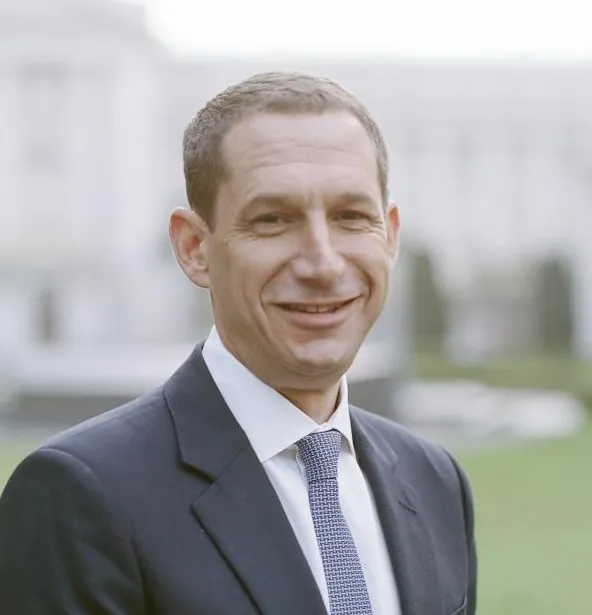
UCSF social workers demand tougher security, caseload limits after colleague Alberto Rangel was fatally stabbed on duty

Frontline staff press leadership for concrete safety changes after December killing at San Francisco General Hospital
Dozens of University of California, San Francisco (UCSF) social workers rallied this week at UCSF’s Mission Bay campus, demanding stronger workplace safety measures following the fatal stabbing of clinical social worker Alberto Rangel while he was working at Zuckerberg San Francisco General Hospital (ZSFGH) in December 2025.
Rangel was attacked on Dec. 4, 2025, in Ward 86, the hospital’s HIV clinic, and later died from his injuries. Prosecutors have charged 34-year-old Wilfredo Jose Tortolero-Arriechi with murder in the case. Court proceedings in the weeks after the incident included hearings addressing custody status and allegations about the sequence of events leading up to the attack.
Safety warnings, staffing strain, and what workers say is a leadership gap
In statements released after the killing, clinic staff described repeated efforts to flag escalating concerns about the patient involved and to seek security planning and clearer communication. Workers argue that the killing exposed systemic weaknesses in how threats are assessed, how information is shared across teams, and how quickly safety resources are deployed in high-risk settings.
At the Mission Bay rally, social workers also framed safety as inseparable from staffing and workload. Participants called for manageable caseloads and for frontline staff to be directly involved in designing security protocols and response plans, citing the unique risks of clinical social work in hospital environments where staff often meet with distressed patients and families in unpredictable circumstances.
- Enhanced safety protocols and clearer emergency response procedures in clinics and hospital units
- Reduced caseloads and staffing supports aimed at lowering risk during high-intensity patient interactions
- Trauma-informed support services for employees affected by the killing and subsequent workplace stress
- Pay equity between social workers in different UCSF job classifications and work sites
- Formal inclusion of frontline workers in workplace safety decision-making
Institutional policies exist, but workers want implementation that matches conditions on the ground
UCSF maintains internal processes intended to address threatening behavior, including threat management resources that outline reporting pathways and response coordination. Separately, San Francisco’s public health system has moved toward additional security reviews and post-incident procedural changes at ZSFGH.
The dispute now centers on whether existing frameworks were operationalized effectively before the December attack, and whether changes made since then are adequate for the day-to-day realities of patient-facing staff.
Workers’ central claim is that a preventable workplace death should trigger a transparent accounting of failures and a measurable, time-bound safety overhaul rather than incremental adjustments.
UCSF social workers say they are seeking direct engagement with top university leadership and a negotiated set of safety commitments that can be tracked over time. Meanwhile, the criminal case stemming from Rangel’s death continues through the court system as the broader questions of institutional responsibility and workplace protections remain contested.
Surveillance video captures daytime stabbing in San Francisco Chinatown as deputies detain suspect nearby

One dead and one hospitalized after late-night car and scooter collision in San Francisco’s North Beach
First Middle East-to-West Coast Nonstop Flight Since Iran War Lands at San Francisco International Airport