Valencia Street payphone links San Francisco callers to Abilene, Texas in a project about polarization
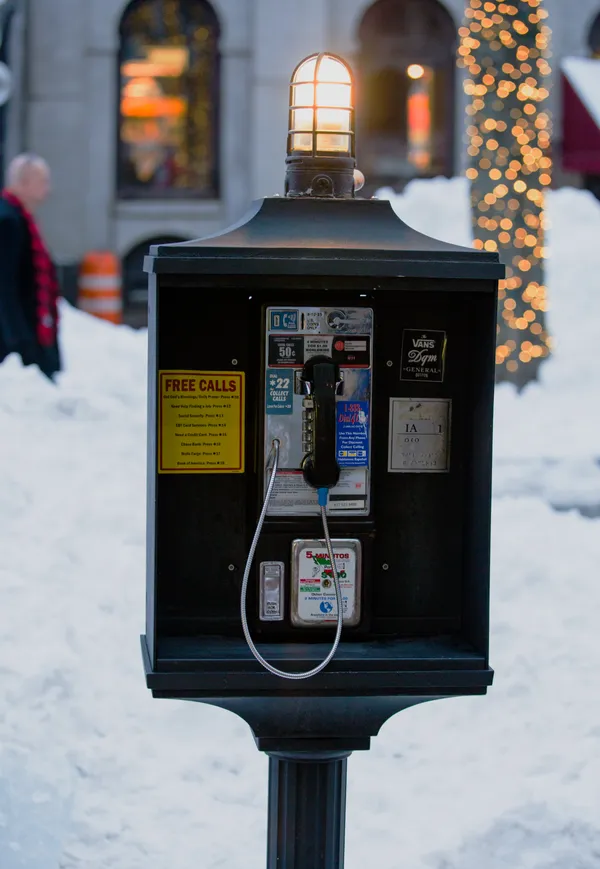
A payphone meant to spark cross-country conversations appears on Valencia Street
A newly installed payphone on Valencia Street in San Francisco’s Mission District is drawing attention for an unusual function: picking up the receiver initiates a call intended to connect to a corresponding public phone in Abilene, Texas. The installation is presented as a structured prompt for conversation between strangers in two cities framed as political opposites.
The project’s on-device signage identifies the installation as “The Party Line” and credits a group called Matter Neuroscience. The text describes the phone as a “social experiment” designed to encourage “meaningful conversation” across political differences. It also states that conversations are recorded, with an assurance that personal names shared will be removed from any public excerpts.
How the installation is described and what it claims to measure
The signage makes specific claims about stress and mood, asserting that hostile political discourse can elevate cortisol levels and that positive exchanges can reduce stress while increasing “feel-good” neurotransmitters. While the language is scientific in tone, the installation does not provide methodological details on how any physiological effects would be measured, whether participants are surveyed, or how recorded conversations will be analyzed. The public-facing materials focus on encouraging respectful dialogue rather than documenting a formal research protocol.
Privacy and consent questions arise from the recording notice
Because the phone’s text states that calls are recorded, the installation raises practical questions common to audio-recorded public projects: whether both parties are clearly notified at the start of a call, how long recordings are retained, who has access to raw audio, and what safeguards exist beyond removing names in publicly shared clips. The signage indicates an intent to preserve anonymity in published excerpts, but does not outline data-handling practices in detail.
A modern twist on a historical communications idea
The project’s name echoes the “party line,” a telephone system once common in parts of the United States where multiple households shared a single line. In that earlier model, the shared line could limit privacy and created a form of community eavesdropping by design. By contrast, the Valencia Street installation uses the imagery of an older technology while reframing it as a deliberate, opt-in encounter between strangers—one that depends on two people choosing to pick up at the same time and remain engaged.
What participants can expect
- A public payphone-style interface intended for spontaneous participation by passers-by.
- Calls presented as a bridge between two distant communities, with conversation as the central activity.
- Recording disclosed on the phone’s signage, along with an anonymity promise for any publicly shared material.
The installation is positioned as an invitation: replace political argument with direct, unscripted conversation between strangers.
As the installation gains visibility, the primary verified facts remain the phone’s stated purpose, its cross-city connection concept, and the recording disclosure. Any broader conclusions about its impact on polarization would depend on transparent documentation of participation rates, consent procedures, and how any findings are defined and reported.